



DNA/RNA Synthesis
RNA synthesis, which is also called DNA transcription, is a highly selective process. Transcription by RNA polymerase II extends beyond RNA synthesis, towards a more active role in mRNA maturation, surveillance and export to the cytoplasm.
Single-strand breaks are repaired by DNA ligase using the complementary strand of the double helix as a template, with DNA ligase creating the final phosphodiester bond to fully repair the DNA.DNA ligases discriminate against substrates containing RNA strands or mismatched base pairs at positions near the ends of the nickedDNA. Bleomycin (BLM) exerts its genotoxicity by generating free radicals, whichattack C-4′ in the deoxyribose backbone of DNA, leading to opening of the ribose ring and strand breakage; it is an S-independentradiomimetic agent that causes double-strand breaks in DNA.
First strand cDNA is synthesized using random hexamer primers and M-MuLV Reverse Transcriptase (RNase H). Second strand cDNA synthesis is subsequently performed using DNA Polymerase I and RNase H. The remaining overhangs are converted into blunt ends using exonuclease/polymerase activity. After adenylation of the 3′ ends of DNA fragments, NEBNext Adaptor with hairpin loop structure is ligated to prepare the samples for hybridization. Cell cycle and DNA replication are the top two pathways regulated by BET bromodomain inhibition. Cycloheximide blocks the translation of mRNA to protein.
DNA/RNA Synthesis Isoform Specific Products
All Product Categories
-
DNA/RNA Synthesis Inhibitors
(1479)
View all products
-
DNA/RNA Synthesis Agonists
(11)
View all products
-
DNA/RNA Synthesis Antagonists
(2)
View all products
-
DNA/RNA Synthesis Activators
(52)
View all products
-
DNA/RNA Synthesis Modulators
(34)
View all products
-
DNA/RNA Synthesis Chemicals
(20)
View all products
-
DNA/RNA Synthesis Inducers
(14)
View all products
-
DNA/RNA Synthesis Degraders
(5)
View all products
-
DNA/RNA Synthesis Controls
(5)
View all products
-
DNA/RNA Synthesis Substrates
(6)
View all products
-
DNA/RNA Synthesis Ligands
(5)
View all products
-
DNA/RNA Synthesis Related Products (2930)
Related Products (2930)

-
Antibodies (248)
-
DNA/RNA Synthesis Isoform Comparison
-
Acyclovir triphosphate sodium (100 mM)
 0 ImagesSynonyms: AcycloGTP sodium (100 mM)Acyclovir triphosphate (Synonyms: AcycloGTP) sodium is a Acyclovir (HY-17422) derivative that competitively inhibits viral DNA polymerase by acting as an analog to deoxyguanosine triphosphate (dGTP). Acyclovir triphosphate (sodium) (100 mM) is an inhibitor of HIV-1 reverse transcriptase. Acyclovir triphosphate (sodium) (100 mM) causes termination of viral DNA synthesis.
-
YRDC-IN-1
 0 ImagesCat. No.: HY-Q66655CAS No.: 3120494-74-5YRDC-IN-1 is a blood-brain barrier-permeable YRDC inhibitor. YRDC is a key enzyme that catalyzes the formation of N6-threonylcarbamoyladenosine at position 37 of tRNA (t6A37). YRDC-IN-1 selectively inhibits the translation of ANN codon-enriched FABP7, thereby reducing lipid droplet formation, increasing ROS, and reversing the acquired resistance of GBM to Temozolomide (TMZ) (HY-17364). YRDC-IN-1 can be used for the research of glioblastoma.
-
RG7800 tetrahydrochloride
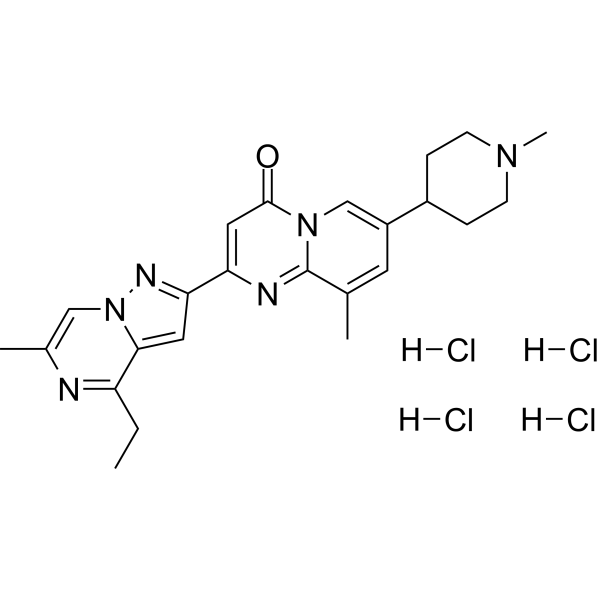 0 ImagesCat. No.: HY-101792APurity: 99.79%Synonyms: RO6885247 tetrahydrochlorideRG7800 hydrochloride is an orally active SMN2 splicing modulator, with EC1.5xs of 23 nM and 87 nM for SMN2 splicing and SMN protein; RG7800 hydrochloride has the potential to treat spinal muscular atrophy.
-
N-Acetyl-Calicheamicin
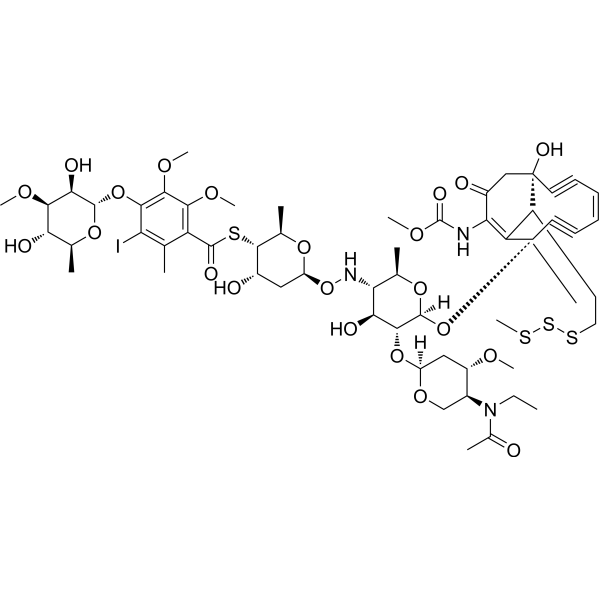 0 ImagesSynonyms: N-Acetyl-Calicheamicin γ; N-Acetyl-γ-calicheamicinN-Acetyl-Calicheamicin (N-Acetyl-Calicheamicin γ), an enediyne anti-tumor antibiotic, is an ADC cytotoxin. N-Acetyl-Calicheamicin can induce DNA damage, and can be used in the synthesis of ADC.
-
GSK_WRN4
 0 ImagesGSK_WRN4 is an orally active WRN helicase inhibitor (pIC50=7.6). GSK_WRN4 induces DNA damage markers (p21, p-γH2AX, p-KAP1). GSK_WRN4 selectively inhibits microsatellite-unstable tumor growth in vitro and in vivo by inducing DNA double-strand breaks, particularly at expanded TA repeats and regions of DNA damage.
-
Sodium Camptothecin
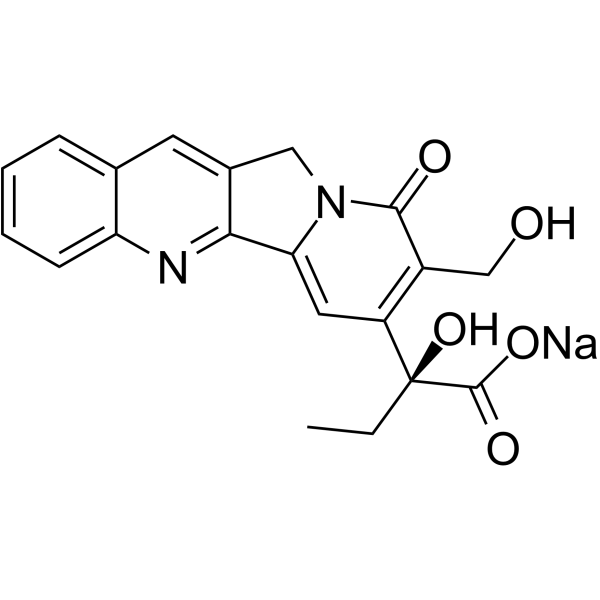 0 ImagesCat. No.: HY-N8533CAS No.: 25387-67-1Sodium Camptothecin is a plant alkaloid, with antitumor activity. Sodium Camptothecin is a reversible inhibitor of RNA synthesis. Sodium Camptothecin is an effective inhibitor of adenovirus replication. Sodium Camptothecin inhibits DNA synthesis and causes breaks in intracellular preformed viral DNA.
-
Thymidine-d3
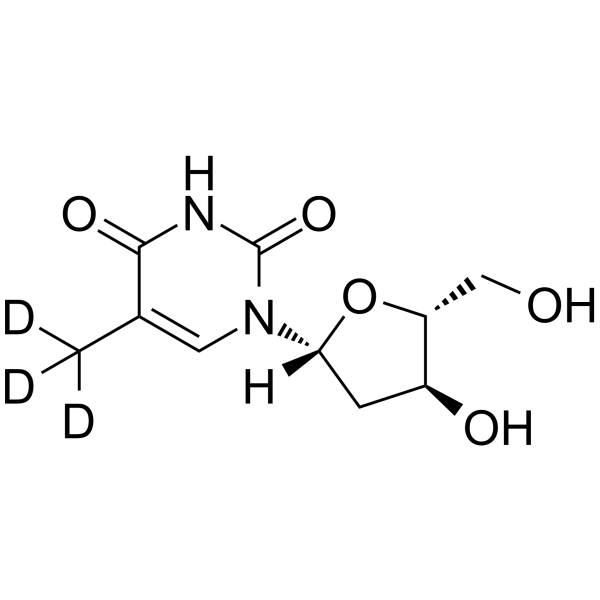 0 ImagesSynonyms: DThyd-d3; NSC 21548-d3
-
Danofloxacin
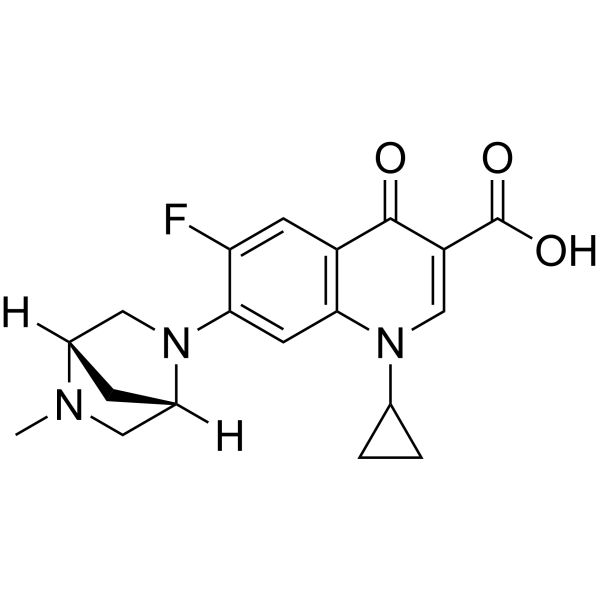 0 ImagesDanofloxacin is an orally active quinolone antibiotic. Danofloxacin targets bacterial DNA gyrase and inhibits bacterial DNA replication, transcription and growth. Danofloxacin can be used for various bacterial infections caused by Escherichia coli, Mycoplasma and other pathogens.
-
Myoseverin
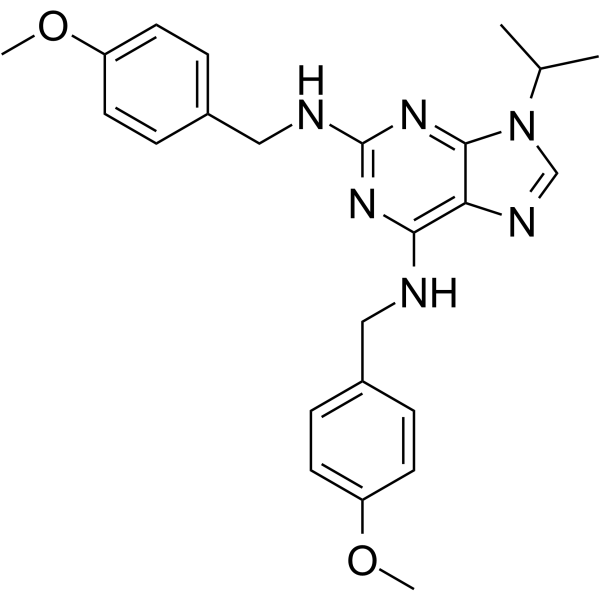 0 ImagesMyoseverin is a microtubule-binding molecule and angiogenesis inhibitor. Myoseverin can induce the reversible fission of multinucleated myotubes into mononucleated fragments. In addition, Myoseverin exerts anti-angiogenic effects by inhibiting endothelial cell function and endothelial progenitor cell differentiation.
-
HeE1-2Tyr
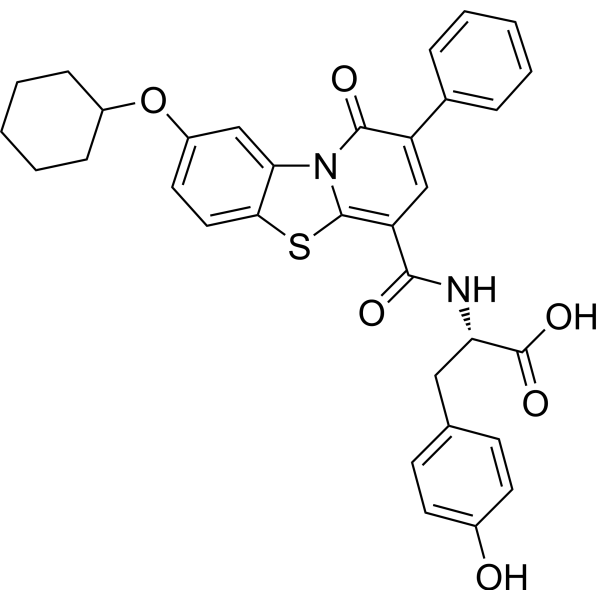 0 ImagesCat. No.: HY-100749CAS No.: 2245195-67-7HeE1-2Tyr, a pyridobenzothiazole compound, is a flavivirus RNA dependent RNA polymerases (RdRp) inhibitor. HeE1-2Tyr significantly inhibits West Nile, Dengue and SARS-CoV-2 RdRps (IC50 of 27.6 μM) activity in vitro.
-
4-tert-Octylphenol
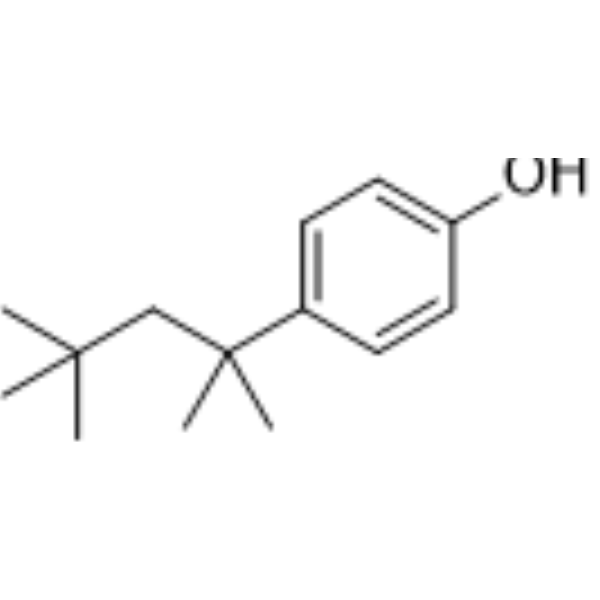 0 Images4-tert-Octylphenol, a endocrine-disrupting chemical, is an estrogenic agent. 4-tert-Octylphenol is also a biodegradation product of non-ionic surfactants alkylphenol polyethoxylates. 4-tert-Octylphenol induces apoptosis in neuronal progenitor cells in offspring mouse brain. 4-tert-Octylphenol reduces bromodeoxyuridine (BrdU), mitotic marker Ki67, and phospho-histone H3 (p-Histone-H3), resulting in a reduction of neuronal progenitor proliferation. 4-tert-Octylphenol disrupts brain development and behavior in mice, which is promising for reserch of immune response, neuro-related diseases and ethology.
-
Q901 TFA
 0 ImagesCat. No.: HY-153278APurity: 98.55%Synonyms: CDK7-IN-21 TFAQ901 (CDK7-IN-21) TFA is a selective and potent CDK7 inhibitor with an IC50 of 10 nM. Q901 TFA disrupts MYC and E2FTOP1-DPCs and sensitizes tumor to TOP1 inhibitors by suppressing RNAPII transition from initiation to elongation. Q901 TFA can inhibit tumor growth and significantly enhances tumor growth inhibition combined with TOP1 inhibitors. Q901 TFA can be used for the research of cancer, such as colon cancer and lung cancer.
-
KL-50
 0 ImagesKL-50 is a selective toxin toward tumors that lack the DNA repair protein O6-methylguanine-DNA-methyltransferase (MGMT), which reverses the formation of O6-alkylguanine lesions. KL-50 activates DNA damage response pathways and cycle arrest in MGMT-cells, independent of mismatch repair (MMR). KL-50 is promising for research of brain tumors that lack the DNA repair protein MGMT.
-
LMP517
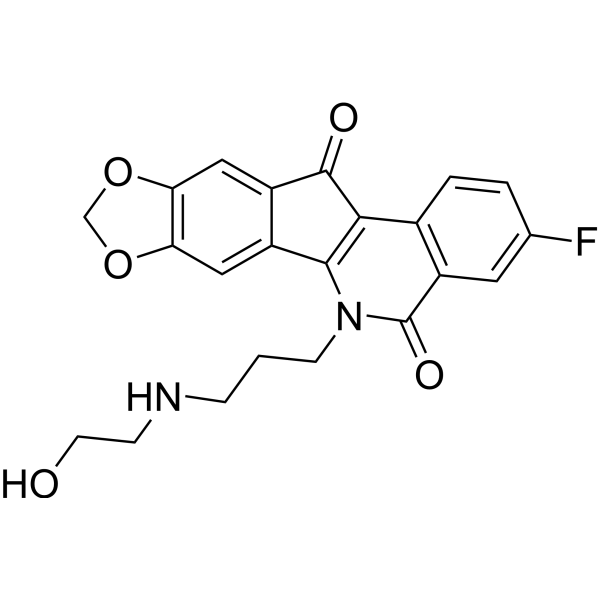 0 ImagesSynonyms: NSC 781517LMP517 (NSC 781517) is a potent and non-camptothecin Topoisomerase I and II (TOP1 and TOP2) dual inhibitor. LMP517 can induce TOP1 and TOP2 cleavage complexes (TOP1ccs and TOP2ccs). LMP517 can induce cancer cells DNA damage and γH2AX production. LMP517 can be used for the research of cancer, such as small cell lung cancer.
-
DNase I RNase & Protease free
 0 ImagesCat. No.: HY-108882BCAS No.: 9003-98-9DNase I is an enzyme that degrades DNA. DNase I is mainly produced by digestive system organs, such as the pancreas and parotid gland. Three types of DNase I are known in mammals: pancreatic type, parotid type, and pancreatico-parotid type. DNase I plays a key role in the cleavage of extracellular DNA, and is critical for limiting inflammatory responses and maintaining homeostasis. DNase I is responsible for digesting extracellular nucleoproteins, which may be essential for preventing autoimmune responses. Decreased DNase I activity may be associated with the onset and progression of systemic lupus erythematosus (SLE). DNase I (RNase & Protease free) is a molecular biology-grade DNase I purified by chromatography to remove RNase and protease.
-
AS-136A
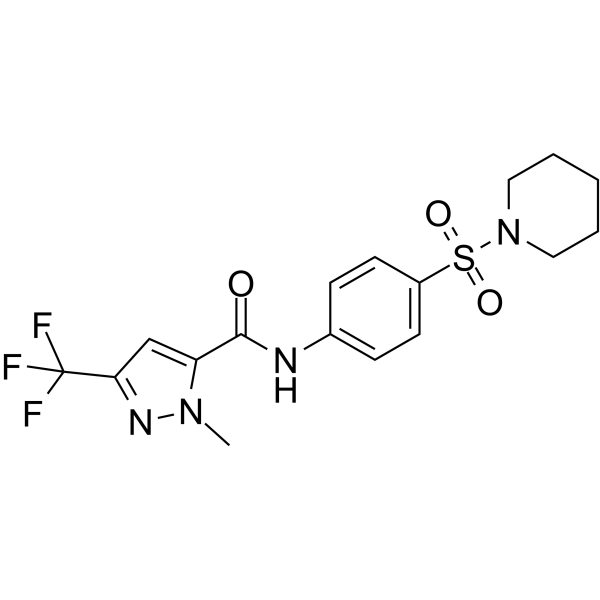 0 ImagesAS-136A is an orally active non-nucleoside inhibitor of the measles virus RNA-dependent RNA polymerase (RdRp) with an IC50 of 2 µM for measles virus.
-
ALKBH5-IN-4
 0 ImagesALKBH5-IN-4 (compound 3) is a RNA m6A demethylase ALKBH5 inhibitor with an IC50 of 0.84 μM. ALKBH5-IN-4 shows inhibitory effect on leukemia cells[1].
-
ddTTP trisodium solution (100 mM)
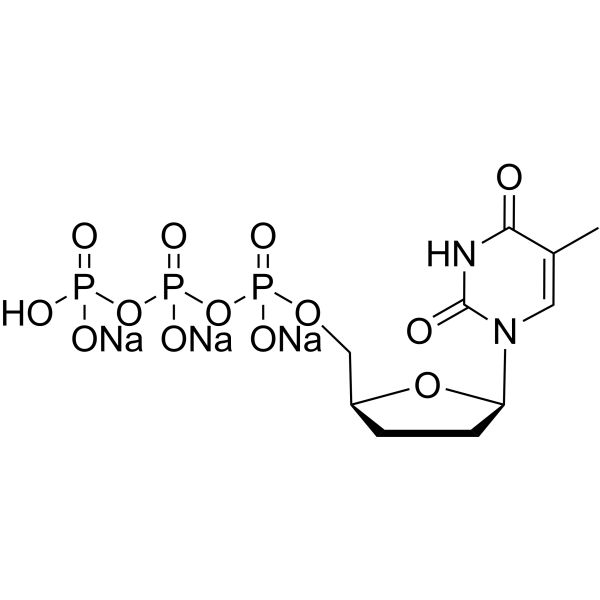 0 ImagesCat. No.: HY-137694BPurity: 99.91%ddTTP trisodium solution (100 mM) is a DNA polymerase γ inhibitor, with Ki values of 0.05 μM and 0.4 μM against bovine testicular DNA polymerase γ. ddTTP trisodium solution (100 mM) can be incorporated into DNA to cause termination of the extended DNA strand. ddTTP trisodium solution (100 mM) can be used in the research of HIV infection.




